
What to Expect in a Doctor of Physical Therapy (DPT) Program
FranU InsiderSo many factors affect our quality of life. But living without pain, moving freely and engaging in activities we love are among the most important. As a physical therapist (PT), you’ll play a key role in helping people recover from disease and injury, and overcome movement dysfunction, empowering them to live their best lives.
When you’re a PT, each of your clients presents unique challenges. The complex and rigorous training you receive in a Doctor of Physical Therapy (DPT) program prepares you for challenges you will face. And when you graduate, you become part of a field that is not only growing but is also deeply satisfying — according to U.S. News & World Report, “physical therapist” ranks in the top 25 on its list of 100 Best Jobs.
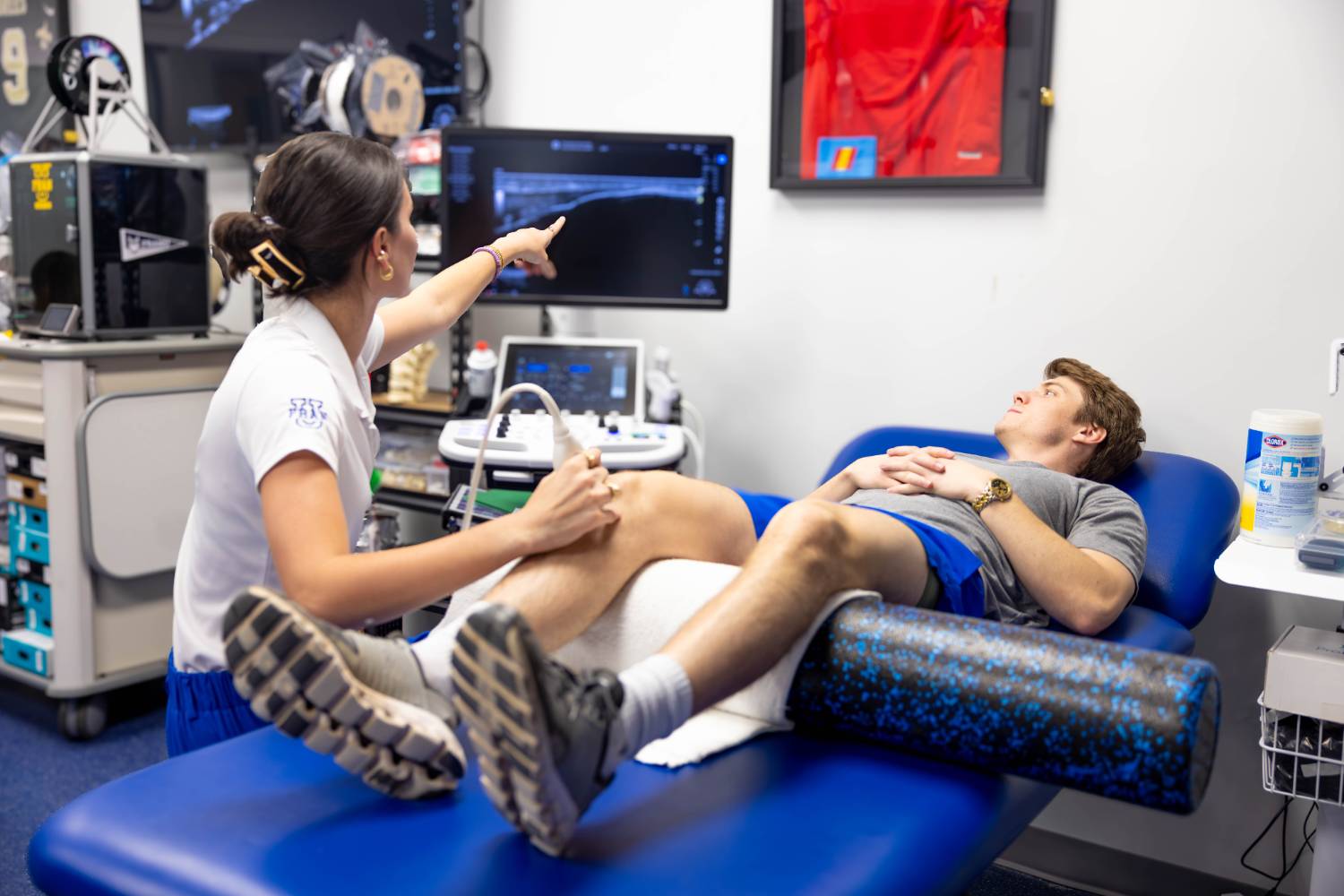
Entry-Level Requirement for Physical Therapy Practice
Physical therapy is a doctoring-level profession. In the United States, all DPTs must graduate from a Doctor of Physical Therapy program accredited by the Commission on Accreditation in Physical Therapy Education (CAPTE) and then pass a state licensure exam.
DPT Curriculum and Requirements
Most DPT programs take three years to complete, with curricula that combine didactic classes, lab work, training in professional practice and clinical experience.
Coursework and Labs
You’ll encounter patients across the lifespan as a physical therapist, from infants to older adults who are managing issues that come with aging. That range encompasses a huge variety of contexts and circumstances, requiring you to build knowledge across the spectrum of illnesses, injuries and conditions.
As a DPT student, you take classes in both foundational and medical science. Typical classes include:
- Biomechanics and kinesiology
- Cardiovascular and pulmonary practice
- Human anatomy & physiology
- Neuroscience
- Pathophysiology
- Pharmacology & Radiology
- Therapeutic exercise
- Exercise Physiology
Some programs also include a research or capstone element that involves a review of existing literature and conducting a study related to physical therapy.
By the time you graduate, you’ll understand how injury, disease and aging affect the human body, as well as learn the techniques and practices needed to restore mobility and help patients remain active.
Clinical Rotations
Hands-on training is a critical element of any DPT program. You might work in an outpatient clinic, be part of supervised rounds at a hospital or gain experience at a rehabilitation center, nursing home, hospital orthopedic clinic or other specialized facility, applying classroom lessons to real patients.
Students typically complete three clinical rotations, each ranging from 8 to 12 weeks in duration. By the time you graduate, you will have earned over 32 weeks of on-the-job training in a range of settings.
Even after years of practice, you’ll still encounter new situations on the job. But your initial clinical rotations will help you build a firsthand understanding of the patient-doctor relationship, as well as acquire valuable experience interacting with colleagues, crafting treatment plans and gaining broader exposure to different specialties.
Preparation for National Exams
Physical therapists must be licensed in the states where they practice. To gain licensure, you must pass the National Physical Therapy Examination (NPTE), a comprehensive exam administered by the Federation of State Boards of Physical Therapy.
While passing the exam is an important part of the licensure process, it’s not the only hurdle prospective PTs must overcome. Each state maintains different requirements to earn a physical therapy license.
While most DPT programs prepare you for the NPTE exam, not all are created equal. The best programs feature engaging and supportive faculty with a wide range of teaching and clinical experience, along with deep advising and academic support that can help you navigate challenges with care. Details like these can make the difference between passing the NPTE on the first attempt and needing to try again. Passage rates are available online.
Career Outlook for Physical Therapists
Nearly a quarter of the U.S. population will be older than 65 by 2050, up from 17% today. As a result, patients are going to face more age-related complications that require physical therapy.
The need for PTs is expected to grow as well. By 2034, the number of PT jobs in the U.S. is expected to increase 11%, according to the U.S. Bureau of Labor Statistics. It’s a lucrative career: The median pay for physical therapists was $101,020 in 2024.
Many PTs ultimately choose an area of specialization. These include:
- Cardiovascular and pulmonary
- Clinical electrophysiology
- Geriatrics
- Neurology
- Oncology
- Orthopaedics
- Pediatrics
- Sports
- Women’s health
- Wound management
How Can I Apply to a DPT program?
All DPT programs require applicants to complete a bachelor’s degree before starting. Students should complete prerequisite courses in college, including anatomy and physiology, biology, chemistry, physics, psychology and statistics, while also acquiring clinical experience in a setting such as a hospital or clinic.
Some programs, including FranU, combine an undergraduate and DPT degree which allows students to start their doctoral studies following their third year of undergraduate classes.
You can apply to multiple programs using the Physical Therapist Centralized Application Service (PTCAS).
As you consider which DPT program to enter, it makes sense to go beyond the rankings and examine how well individual programs will prepare you for a career. NPTE pass rates, time to completion, student-faculty ratios, campus facilities, instructor experience and accessibility and variety in clinical placements are just some of the factors to keep in mind.
Build Clinical Expertise to Excel in Patient Care in FranU’s DPT Program
At Franciscan Missionaries of Our Lady University (FranU), you receive the rigorous training needed to become a licensed physical therapist while studying with expert practitioners. FranU’s Doctor of Physical Therapy program is just eight semesters long — one fewer than at many other schools, meaning you can begin your PT career even more quickly.
State-of-the-art labs, dedicated tutors and hands-on research experience prepare FranU students for success: 100% of our PT students are employed within a year of graduation, with an 98% ultimate NPTE pass rate.
In addition, FranU’s DPT program offers students several advantages:
- Faith-based education
- Credit towards FranU Master of Healthcare Administration
- Electives that prepare new graduates for specialization in orthopedics, sports and pediatrics among others
- High-fidelity simluations, including interdisciplinary opportunities
- Opportunities for Service Learning in the community
- Clinical placements across the country
- International electives