
Welcome to the page your GPA’s been waiting for. Whether you’re new to the whole “college-level studying” thing or you’ve just been winging it with vibes and caffeine, this guide’s got your back.
Studying in college isn’t about pulling all-nighters or highlighting every word in your textbook (please don’t do that). It’s about working smarter, not harder and actually understanding the material before it shows up on a test.
In this guide you will find:
- Proven study techniques that actually work
- Tools to help you stay focused (and sane)
- Tips for making your brain remember things longer than 30 seconds
- Study methods that feel chaotic but are secretly brilliant (looking at you, whiteboard people)
Let’s do this.
Study Methods

Active Recall
A.K.A. stop rereading and start remembering.Instead of passively looking at your notes, quiz yourself.
- Close your book and try to explain the concept out loud
- Write down what you remember, then check it
- Use flashcards (physical or digital like Anki or Quizlet)
Why it works: This forces your brain to work, which strengthens memory and reveals what you still need to study.

Spaced Repetition
Less cramming. More remembering.Review material over time, not all at once.
- Start early and review your notes multiple times per week
- Use apps like Anki that space the cards out automatically
- Schedule mini reviews into your calendar
Why it works: Revisiting material right before you forget it = deeper longer-lasting learning.
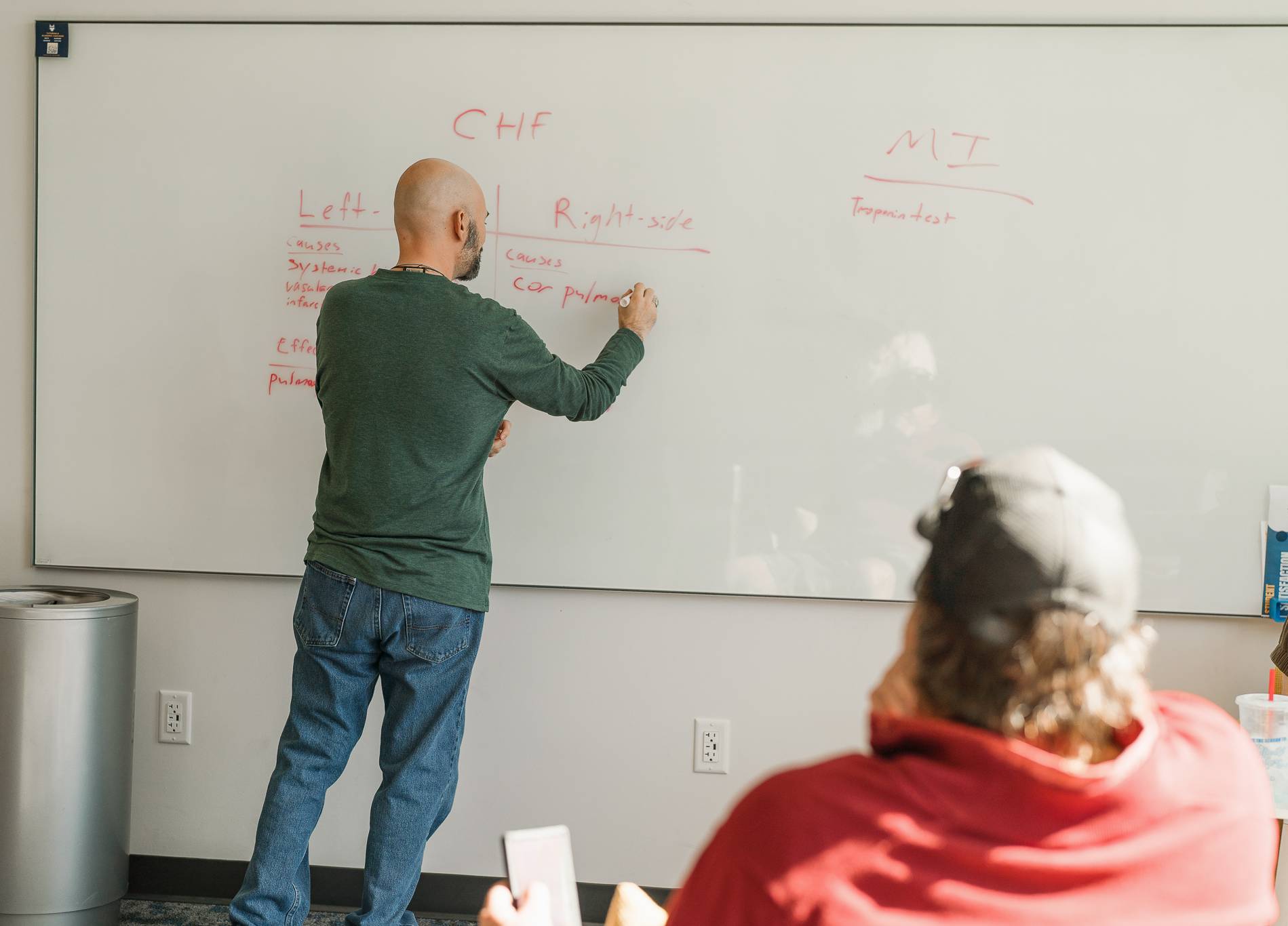
Our Favorite: The Whiteboard Trick
Rewriting + explaining = ultimate memory combo-
Grab a whiteboard (or mirror with dry-erase marker)
-
Rewrite your notes and explain them out loud like you’re teaching a class
-
Use different colors or draw diagrams
Why it works: You’re engaging multiple parts of your brain: writing, speaking, visualizing and identifying what you don’t know yet.
Bonus: This method will make you feel like a chaotic academic wizard.

The Pomodoro Technique
Perfect for procrastinators and brain-scatterers.Break studying into focused chunks with built-in breaks:
-
25 minutes of work
-
5-minute break
-
Repeat 4 times, then take a longer break
Apps to try: Forest, Pomofocus, TomatoTimer
Why it works: Keeps you fresh and focused without burning out.

Interleaving (Mix It Up)
Don’t just drill the same thing over and over.-
Study different subjects or topics in one session
-
Rotate between types of problems or concepts
-
Mix up formats: notes → quiz → diagram → explain
Why it works: Helps your brain learn to apply knowledge, not just memorize it.

Teach It to Someone (or your pet, or the mirror)
Teaching = understanding.-
Explain it out loud in simple terms
-
Record yourself and play it back
-
Make voice memos to review while walking
Why it works: If you can teach it clearly, you truly understand it. If you can’t, then you know what to review.
More Helpful Study Tips
Study Playlists or Ambient Noise
Silence isn’t for everyone. Sound can help you focus.Try these:
-
Go to YouTube and search for chill Lofi playlists. There are tons of them.
-
Look up the instrumental track of your favorite movie.
-
White noise or ambient cafés (Noisli, myNoise, YouTube “study with me” streams)
Why it works: Light background noise blocks distractions and boosts focus, just keep it lyric free if you’re writing.
Make a Study Plan (That You’ll Actually Stick To)
Don’t wait until the night before.-
Use a planner or calendar (paper, Google, Notion, whatever works)
-
Break big assignments into bite-sized pieces
-
Schedule your Pomodoros and whiteboard sessions
-
Add deadlines before the real due date, just in case
Why it works: Structure lowers stress. A plan means fewer panic-fueled study sessions at 2 a.m.
Already took the test and it didn’t go great?
Don’t panic, we’ve got you. Check out our other guide for What to Do When A Test Doesn't Go As Planned.