
Your Ultimate College Survival Guide
Your Roadmap to College Success
Welcome to Franciscan Missionaries of Our Lady University, or as we like to call it, FranU! You’re officially in college, which means you’re about to learn a lot, both in class and in life. Spoiler alert: only some of it is in the syllabus.
This page? It’s your cheat sheet, your survival guide, your “hey, no one told me that!” handbook. Think of it like advice from an older sibling who’s been through it all, we made the mistakes so you don’t have to (you're welcome).
From avoiding the dreaded 7:30 a.m. class to figuring out where the best campus bathrooms are, this is the stuff they don’t cover in orientation. We’ll help you navigate scheduling, studying and yes, how to look like you have your life together when you definitely do not yet. We're talking real-life tips, small wins, things to avoid and everything in between.
So take a breath, scroll down and let’s get you through this thing like a pro. Or at least like a pro-in-progress.

How to Apply to FranU and Next Steps
Visit apply.franu.edu and create an account.
Tip: make sure to use a personal email (not a school email or a parent email) for
your account
Choose your school year and start term.
Complete the application and hit "submit."
Have all transcripts and test scores sent directly to FranU or to admissions@franu.edu.
Complete the reply to offer form that you receive, pay your deposit and sign up for an advising appointment.
How to Schedule Classes Like a Pro
To begin scheduling classes, you will meet with an advisor who will guide you through the process and ensure you’re on the right track.
Pro Tips for Scheduling:
- Balance is key. Don’t stack all your hardest classes in one semester unless you enjoy chaos.
- Credit hours = classroom hours per week = 2x the amount of required homework/study
hours per week.
So that “3-credit” class? It’s basically a part-time job, 3 hours in class and about 6 hours of independent work every week. - Don’t skip electives, they’re where you find cool classes and maybe your new favorite subject.
What to Expect on Your First Day of Class
You want to start your first day off right, which means not forgetting anything at home. Here is what you need to bring to feel prepared and confident day one:
- Always have your ID badge; Otherwise, you will be stuck outside the buildings.
- Bring a backpack or bag to hold your things, because you will be walking from building to building.
- We recommend having a laptop to take notes, but you can also bring a notebook and
a pencil.
- See further in the guide for laptop recommendations.
- A light jacket is great to have for cold classrooms.
- Have your class schedule with you, so you know when and where you need to be.
- If you’re a chronic over-packer, you can opt out of bringing a lunch and head to the Fresh Market on the second floor of St. Francis Hall (the chicken alfredo is great.)

Freshman Must-Dos
- Set up your student email (with a signature). Check out our guide to student emails on our page, Email Etiquette.
- Find your classrooms
- Take a picture of your class schedule, trust us, you’ll forget it on day two.
- Student organizations, campus ministry and service opportunities are great ways to meet people and get involved.
Academic Tips
Aka: How to Keep your GPA Alive While Having a Social Life
For more detailed tips, check out our Academic Tips for College Success page.
How to Study Smarter (Not Harder)
College isn’t about grinding 24/7. Study strategically.
-
Study in short, focused sessions
-
Take breaks, hydrate and definitely don’t pull all-nighters unless it’s unavoidable. (But was it really?)
Want a deep dive on study hacks? Check out our full page, How To Study.
Surviving Midterms/Finals Week
We won’t lie, exam week is the scariest week of the year. Lucky for you, we’ve created tips on how to help you stay sane and prevent crashing out during finals and midterms. If you take anything from this guide, it is to not wait until the night before. We’ve got your back!
Want a deep dive on Academic Tips? Check out Our Academic Tips page for a deep dive.
Academic Tips for College Success
Office Hours: Take Advantage
Office hours = free academic power-ups. Use them to ask questions, understand material better and build relationships with professors.
- Whether you have a question about the class material or want to discuss a past exam, pay a visit to your professor and have a discussion. They have office hours for a reason!
- Don’t be intimidated, every professor has been a student before. Most of them are chill and genuinely want you to succeed.
What to Do After a Poor Test Performance
Step 1: Don’t panic. Step 2: Let’s fix it.
We’ve all been there. You studied, showed up and gave it your best shot, only to get
your test back with a lower score than you hoped for. It’s disappointing, maybe even
overwhelming. Relax. Even geniuses have off days (Einstein probably flunked a quiz
or two).
Want a deep dive on recovering after a disappointing test score? Check out our full page, When a Test Doesn’t Go as Planned.
When a Test Doesn’t Go as PlannedClassroom Tips
To set yourself up for success in class, it's important to stay focused, engage with the material and be proactive in your participation. For more advice on succeeding in the classroom, check out our guide, Mastering the College Classroom.
How to survive (and thrive) from the front row to the back corner.
Quick Classroom Tips:

Attend Regularly and Stay Engaged
Show up, participate and exchange notes with a buddy if you miss class.

Sit Where You’ll Focus
Choose a spot with fewer distractions, like the front row.

Take Effective Notes
Summarize key points, use bullet points and review your notes soon after class.

Participate, Even a Little
Participation doesn’t always mean raising your hand every two minutes, it means being present and engaged.

Know Your Syllabus
It contains important dates and rules, so keep it handy.

Group Projects
Stay organized and communicate often with your team.
Email Etiquette and How to Email Professors
It’s not scary. It’s just professional texting.
Emailing a professor can feel weird at first. You may wonder things like, “Do I start with ‘Hi,’ ‘Hey,’ or ‘Esteemed Academic Overlord’??” Don’t worry. Here’s how to get it right without overthinking it.
Check out our guide, Email Etiquette and How to Email Professors.
Social Life & Campus Culture:
How to Make Friends (Even If You’re Shy)
-
People will walk in packs the first two weeks. It’s normal. Everyone’s terrified. It settles down.
-
Create and join study groups for your classes/cohort: Study groups are low-key hangouts with a purpose. You’ll meet people, share notes and build friendships just by showing up. Regular sessions mean you’ll see each other often, and that’s how real connections start.
-
Find a friend at orientation: Everyone there will be in the same boat as you: nervous and new. So, don’t be afraid to find a friendly face and say hi. They won’t bite (most likely).
-
Join a club: Joining clubs in college is like adding some spice to your ramen. You get to meet cool people, try things you didn’t know you were into and maybe even look like you’ve got your life together on your resume. Plus, students who participate in extracurricular activities are 50% more likely to graduate on time.
Parking on Campus: What You Really Need to Know
Parking can be one of the trickiest parts of college life, especially during the first few weeks. Here's what to keep in mind so you’re not circling the lot (or worse, getting ticketed).
Read Every Sign
On campus, some parking spaces are reserved. When in doubt, don’t risk it.
Stick to Concrete or Gravel
Do not park on the grass or dirt; especially not on tree roots. Parking on tree roots, particularly in the lot at Brittany and Picardy, damages the trees and can earn you a warning or fine. Grounds crews are serious about it, and rightly so. Keep your tires on designated gravel or paved areas only.
“I parked on tree roots once. Came back to a warning ticket and a squirrel staring
me down. Never again.”
— Someone who learned the hard way
Places You Absolutely Cannot Park
Some lots are strictly off-limits, no matter how open or convenient they look:
-
SJB Group (next to St. Francis Hall): This is a private engineering firm. Their lot is for employees only.
-
BLRB/BR Physical Therapy – 5222 Brittany Drive: Private medical facility. No student parking.
-
Baton Rouge Cardiology – 5231 Brittany Drive: Another medical facility that’s off-limits for students.
Early Birds Get the Spot
If your class starts at 9:00 a.m., don’t roll in at 8:55 expecting front-row parking. During peak times (especially the first two weeks), you’ll need to get there early if you want a decent spot. Budget in some extra time so you’re not sprinting to class or circling for 20 minutes in frustration.
FranU Parking MapHealth & Well-being:
How to Stay Healthy (Even When You’re Busy)
Remember when your parents used to say, “You are what you eat”?
Well, turns out they were onto something (ugh, they were right again). Your brain runs better on real food, not just energy drinks and vending machine snacks. Prioritizing healthy meals, staying active and getting enough sleep can seriously boost your focus, mood and grades.
Even small changes like drinking more water or taking a walk between classes can make a big difference. Your body and brain are on the same team, so treat them like it!

Stress Management 101
College can be a lot. Between classes, assignments, work and trying to have a social life, stress is normal. But it doesn’t have to run the show.
Here are a few ways to keep your cool:
- Move your body: Even a 10-minute walk can help (yes, going to get a sweet treat counts).
- Breathe: Try deep breathing or meditation apps.
- Laugh: Watch a funny video, call a friend or scroll memes (in moderation).
- Talk it out: FranU Counseling Services are here for you. It is free, confidential and here to help.
Hydration Station
You’ve heard it a million times, but here it is again: drink more water. Your brain, body and skin will thank you. Dehydration can mess with your focus, energy and even your mood.
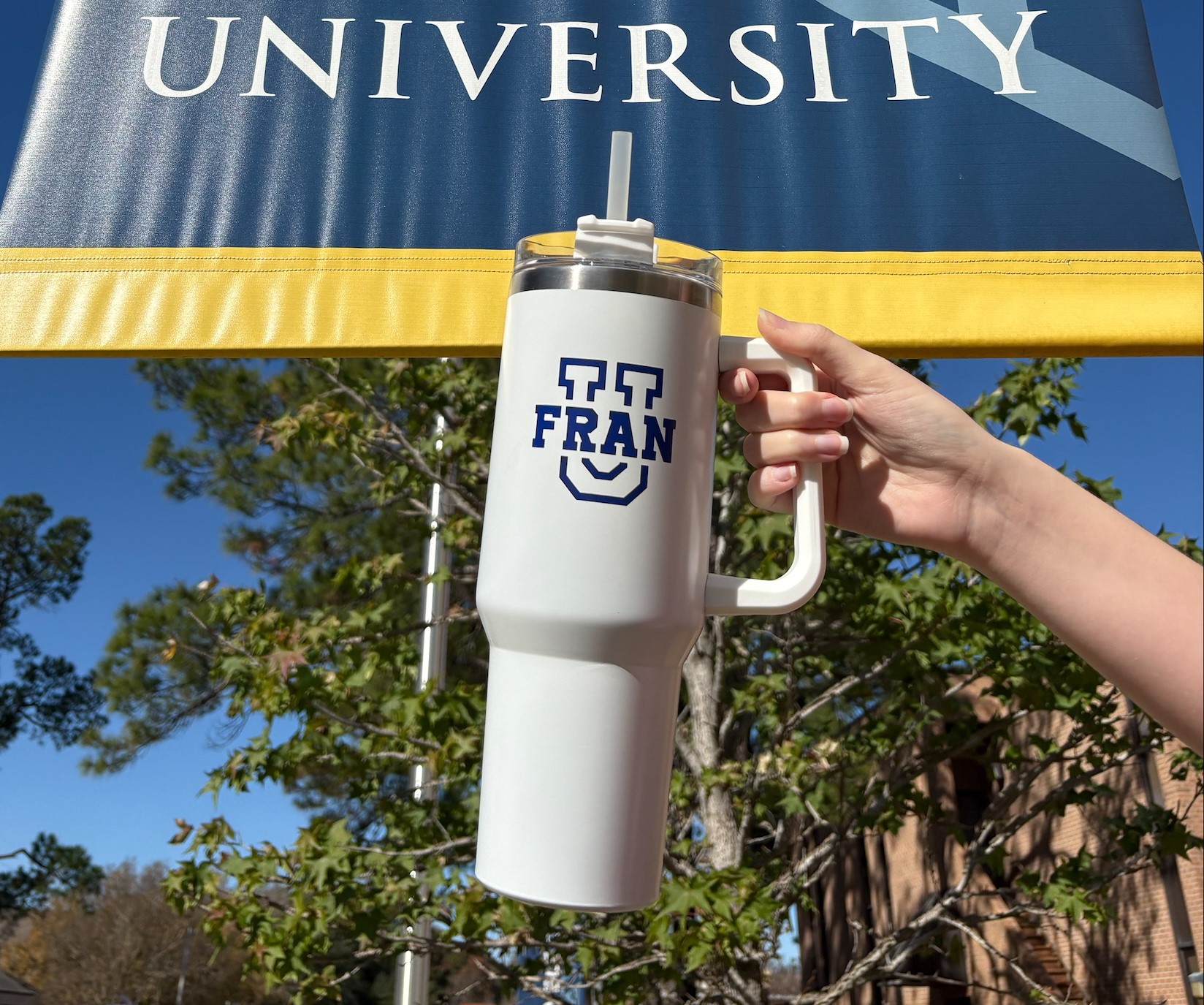
Our campus has water refilling stations in every building, and yes, 40 oz Stanley cups fit.
Quick Tips:
- Carry a reusable water bottle (bonus points if it has stickers).
- Set reminders to sip throughout the day.
- Choose water or tea over soda and energy drinks when you can.

How to Get a Good Night’s Sleep in College
Okay, real talk: sleep is the unsung hero of college success. It improves memory, focus and even your immune system.
Here are some tips to help you catch those Zs:
- Stick to a sleep schedule (yes, even on weekends… mostly).
- Avoid caffeine late in the day (we’re looking at you, 5 p.m. iced coffee).
- Create a wind-down routine – dim the lights, put away any and all electronics and relax.
- Nap smart – 20-minute power naps > 3-hour accidental comas.
Tech & Tools:
Must-Have Apps for College Students
- OneNote
- Quizlet
- Examplify
- Canva
- Kahoot
- Notion
- GroupMe
Laptops our students like:
- Dell Inspiron
- Dell XPS
- Lenovo Yoga
- Lenovo Thinkpad
- MacBook Pro
- MacBook Air
- Microsoft Studio Laptop 1 & 2
Moodle Compatibility
Make sure your laptop meets the technical requirements for Moodle to avoid issues with coursework and exams.
Beyond College:
Planning Your Success Beyond the Classroom
Always. Be. Networking. Networking builds valuable relationships that can greatly impact your professional career. These professional relationships can help provide opportunities later in your career, connect you with employers and even serve as references on your resume.
You wouldn’t start a group project the night before it’s due (at least we hope not), so don’t treat your future career that way. Start early, even freshmen can visit the career center, we promise that they are nice.
Polish up that profile, and get to posting (professionally). You can post about class projects, courses you have completed, your internship and more.
Internships are for you figure out what you don’t want to do as much as what you do. Also, they look great on your resume.
Some of your peers will get job offers during their finals. Others might take a while to find their career path. Both of these paths are valid. You’re not behind, you’re just on your own timeline.